Many dogs treat nail trims like a wrestling match, and many owners dread them just as much. Nail care does not have to be a fight. With the right tools, a slow introduction and plenty of treats, most dogs can learn to accept quick trims calmly.
The American Kennel Club recommends introducing nail trims gradually with plenty of treats, and advises asking a veterinarian or groomer for help if you are unsure how to trim safely.
Why Nail Length Matters
When nails grow too long, they hit the ground with every step. This pushes the toes at an awkward angle and can make walking uncomfortable. Over time, long nails can change how a dog stands and moves. Very long nails can also curl, snag on carpets and split, and dewclaws, the higher nails on the inner leg, can grow into the paw pad if ignored.
A simple guide many groomers use: if you can hear your dog’s nails clicking on a hard floor, they are probably too long. Many dogs need a trim every three to four weeks, but it varies. Dogs that walk often on pavement may wear their nails down naturally and need fewer trims.
Know the Anatomy: The Quick
Inside each nail is the quick, a living core with blood vessels and nerves. Cutting into it hurts and causes bleeding, which is the main reason dogs learn to fear nail trims.
- Light or clear nails: you can often see the pink quick inside. Stay a few millimeters in front of it.
- Dark or black nails: the quick is hidden. Trim tiny slivers at a time. Look at the cut surface: when you see a small dark circle or a slightly moist, gray-to-pink center, stop. You are close to the quick.
When nails are trimmed regularly, the quick tends to recede over time, letting you keep nails shorter. When nails are left long, the quick grows out with them.
Choosing Your Tools
There are three common options, and each has fans:
| Tool | Pros | Cons |
|---|---|---|
| Scissor-style clippers | Good control, work well on thick nails | Must be kept sharp |
| Guillotine clippers | Easy to use on small to medium nails | Can crush thick nails; blade dulls over time |
| Nail grinder (rotary tool) | Smooth edges, easy to take off small amounts | Noise and vibration bother some dogs; keep long hair away |
Whatever you choose, keep styptic powder or a little cornstarch nearby in case you nick the quick. Good lighting and plenty of small, soft treats are just as important as the clippers.
Teaching Your Dog to Accept Nail Care
If your dog already dislikes trims, rushing will only make it worse. Build comfort in small steps over days or weeks. Do one or two short sessions a day, and only move on when your dog is relaxed at the current step.
- Touch the paw. Lightly touch a paw, then give a treat. Repeat until your dog looks happy when you reach for its feet.
- Hold the paw. Gently hold a paw for a second, then treat. Work up to a few seconds.
- Handle the toes. Press lightly on each toe to extend the nail, then treat.
- Introduce the tool. Show the clippers or grinder, then treat. Touch it to a nail without cutting, then treat. For grinders, turn it on across the room first, then treat.
- Trim one nail. Clip a tiny tip off one nail and give a big reward. That might be the whole session.
- Build up. Add one nail at a time over several sessions. It is fine to do one paw a day.
Short, frequent practice is the key. Our article on why short training sessions work explains why a few minutes beats a long, stressful battle.
Try a Scratch Board
Some owners teach their dogs to file their own front nails on a scratch board: a flat board covered in coarse sandpaper. You reward the dog for scraping its paw across it, much like teaching any trick. It is a handy option for nail-shy dogs, though back nails usually still need trimming.
How to Trim, Step by Step
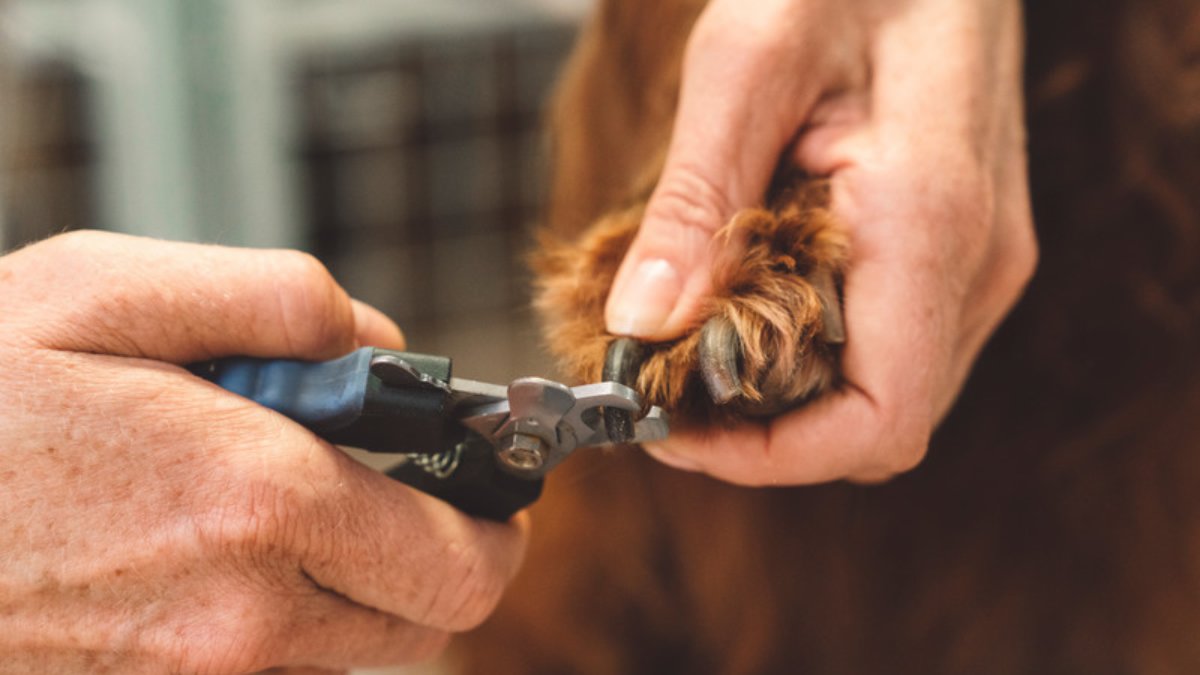
- Sit with your dog in a comfortable, well-lit spot. Small dogs can sit on your lap; larger dogs can lie on their side or sit next to you.
- Hold the paw gently but firmly and press on the pad to extend the nail.
- Cut at a slight angle, following the natural curve of the nail. Take small pieces, especially on dark nails.
- Check the cut surface after each snip. Stop when you see signs of the quick.
- Do not forget the dewclaws if your dog has them.
- If using a grinder, touch the nail for a second or two at a time to avoid heat buildup.
- Reward after every nail, or every snip for a nervous dog.
If You Cut the Quick
It happens, even to experienced groomers. Stay calm so your dog does not pick up on your stress. Press a pinch of styptic powder or cornstarch onto the nail tip and hold gentle pressure for a minute or so until the bleeding stops. Give your dog a treat and end the session on something easy. If the bleeding does not stop after several minutes of pressure, call your veterinarian.
Common Mistakes to Avoid
- Trying to do all nails at once with a scared dog. It is better to trim one nail calmly than force ten.
- Holding a struggling dog down. Restraint can turn worry into panic and make future trims harder.
- Using dull clippers. They crush and split nails instead of cutting cleanly.
- Waiting too long between trims. Long gaps let the quick grow out, so you cannot trim as short.
- Skipping rewards. Treats are what change how your dog feels about the process.
When to Get Help
If your dog growls, snaps or panics during nail care, stop and ask for help. Your veterinarian or a professional groomer can trim the nails while you work on building comfort at home. A certified trainer can help you set up a gradual training plan. Nail care is one part of a full grooming and health routine, covered in our everyday dog care guide, alongside brushing your dog by coat type.
Frequently Asked Questions
How short should I trim my dog’s nails?
Aim for nails that do not touch the floor when your dog is standing. Trim a little at a time and stay in front of the quick.
Is a grinder better than clippers?
Neither is better for every dog. Grinders give smooth edges and make it easy to take off small amounts. Clippers are quicker and quieter. Choose what your dog tolerates best.
Can walking on pavement replace trimming?
For some active dogs, regular walks on hard surfaces wear nails down enough. Most dogs still need occasional trims, especially on the dewclaws and back feet.
Calm nail care is built one treat and one nail at a time. Go slowly, stop before your dog gets worried, and soon trims can become a quick, ordinary part of your routine.